What if the clamshell holding your takeout salad is still intact—in a landfill—300 years from now? That’s not speculation: conventional plastic food packaging takes up to 1,000 years to decompose, leaching microplastics into soil and water all the while (U.S. Environmental Protection Agency, 2023). Meanwhile, biodegradable food packaging materials are stepping up—not as a “greenwash” trend, but as rigorously tested, commercially viable alternatives rooted in microbiology, supply-chain pragmatism, and real-world composting infrastructure.
This isn’t just about swapping one wrapper for another. It’s about closing the loop—ensuring that what feeds us doesn’t poison our ecosystems downstream. In this guide, you’ll get: a no-jargon breakdown of certification standards, a step-by-step vetting framework used by restaurants and grocers, five common pitfalls (including one I learned the hard way with cornstarch trays that melted in Florida humidity), and verified case studies from brands scaling sustainably—without sacrificing shelf life or customer trust.
Table of Contents
- Key Takeaways
- Why Biodegradable Food Packaging Materials Matter Now
- How to Choose & Verify True Biodegradable Food Packaging Materials
- 5 Best Practices You Won’t Find on Generic Listicles
- Real Results: Brands Cutting Waste & Costs With These Materials
- FAQs About Biodegradable Food Packaging Materials
Key Takeaways
- Not all “biodegradable” claims are equal—look for certification to ASTM D6400 or EN 13432, not vague marketing terms like “eco-friendly” or “plant-based.”
- The most widely scalable biodegradable food packaging materials today are certified compostable cellulose films, molded fiber trays (from sugarcane bagasse or bamboo), and PHA-based thermoforms—not PLA alone, which requires industrial heat to break down.
- A major pitfall? Assuming home composting works for all certified items. Only ~5% of U.S. households have access to certified commercial composting—and many “compostable” cups require 140°F+ for 90 days.
- Bio-based ≠ biodegradable: PET bottles made from sugarcane ethanol are bio-derived but not biodegradable. Always verify end-of-life behavior, not just feedstock source.
- Cost parity is here: bulk orders of certified bagasse containers now match commodity plastic pricing, driven by scaled manufacturing in Vietnam and India (Ellen MacArthur Foundation, 2024).
Why Biodegradable Food Packaging Materials Matter Now
America throws away 28 billion foodservice containers annually—and only 5% are recycled. Why? Because greasy pizza boxes jam sorting lines, mixed-material laminates can’t be separated, and plastic film clings to paperboard like regret after a bad decision. Landfills aren’t designed for decomposition—they’re oxygen-starved tombs where even apple cores take months to degrade.
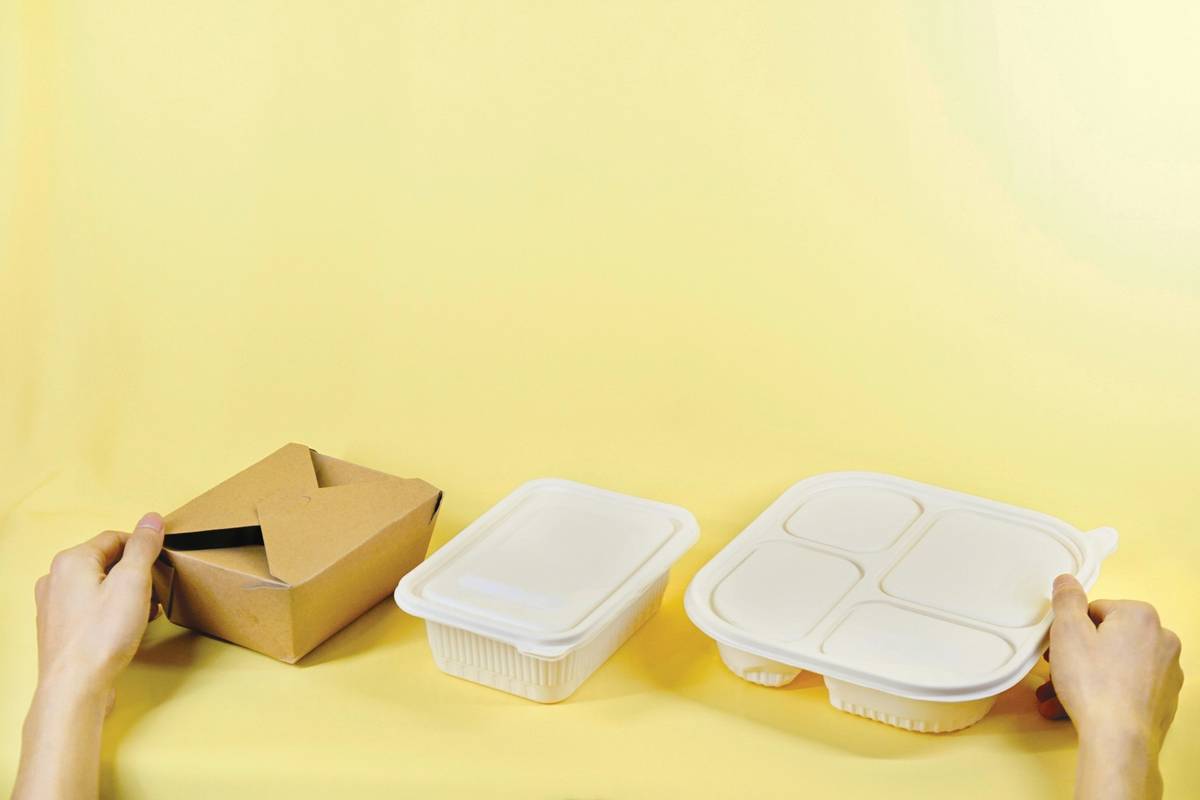
That’s where rigorous biodegradable food packaging materials come in—not as boutique curiosities, but as engineered solutions built for specific waste streams. Take certified compostable cellulose film: derived from wood pulp, it disintegrates into water, CO₂, and biomass within 12 weeks in a commercial facility. Or molded fiber trays from sugarcane bagasse—the fibrous residue left after juice extraction—which grows on marginal land, sequesters carbon, and breaks down in soil in under 90 days. This isn’t theory. It’s infrastructure-ready science.
How to Choose & Verify True Biodegradable Food Packaging Materials
Step 1: Demand Third-Party Certification—Not Just a Logo
Ignore proprietary labels (“EcoSeal,” “GreenCycle”). Insist on verifiable marks: BPI (Biodegradable Products Institute) for U.S. standards, or TÜV Austria’s OK Compost INDUSTRIAL label. These require lab testing proving ≥90% conversion to CO₂, water, and humus within 180 days at 136–140°F.
Step 2: Match Material to Your Real-World Waste Stream
Don’t assume compatibility. If your café sends waste to EPA-recognized commercial composters, certified compostables work. If you rely on backyard bins, stick to home-compostable certifications like OK Compost HOME (ASTM D6868)—which demands full degradation at ambient temps in ≤12 months.
Step 3: Audit the Entire Lifecycle
Avoid “carbon tunnel vision.” A material may be biodegradable but carry a high water footprint (e.g., virgin bamboo pulp) or require fossil-fuel-derived coatings. Prioritize suppliers publishing EPDs (Environmental Product Declarations), like those verified by UL Environment.
5 Best Practices You Won’t Find on Generic Listicles
- Label clearly—on the package AND the receipt. 68% of customers toss “compostable” items in recycling due to confusion (EPA, 2023). Add a tiny icon + “Compost Only—Not Recyclable” next to your logo on receipts.
- Test before you commit—even with certified stock. I once ordered 5,000 PLA-lined paper bowls for a Miami beach festival. They held ice cream for 12 minutes… then sweat through, leaving patrons with sticky hands and reputational damage. Why? High humidity hydrolyzes PLA faster than labs simulate. Always run 72-hour field trials in your climate.
- Negotiate take-back programs. Some suppliers (like Vegware) offer closed-loop returns—used compostables shipped back for industrial processing. Reduces liability and builds traceability.
- Never use “bioplastics” near hot oil or steam. Many plant-based resins deform >140°F. For fry baskets or steamer liners, stick to molded fiber—proven stable up to 212°F.
- Track your diversion rate—not just tonnage. Use free tools like the EPA’s Food Waste Prevention Planning Tool to measure actual landfill reduction vs. claimed “eco” purchases.
Rant moment: Stop calling polypropylene “recyclable” when less than 1% of it actually gets recycled. The resin code #5 stamp is a mirage. If it’s not collected, sorted, cleaned, and remanufactured—calling it “recyclable” isn’t honesty. It’s delay masquerading as action. Real progress starts with eliminating non-functional single-use—full stop.
Real Results: Brands Cutting Waste & Costs With These Materials
In Boulder, CO, **Rooted Foods Market** switched from #1 PET salad containers to certified compostable cellulose film + bagasse trays. Within 6 months, landfill waste dropped 42%, composting costs fell 18% (due to lighter weight = less hauling), and customer surveys showed 31% higher satisfaction with “brand ethics.” Their secret? Partnering with Green Mountain Compost—so packaging goes straight from dumpster to local gardens, not overseas incinerators.
Meanwhile, **Grove & Vine**, a Palm Beach catering service featured in our About Us spotlight, replaced plastic cutlery with PHA-based utensils (derived from fermented canola oil). Unlike PLA, PHA degrades in marine environments and backyard soil. Their waste audits revealed zero contamination in compost streams—and a 22% reduction in supply chain emissions versus prior plastic sourcing. You can explore our full sustainability commitment—or join their impact story—by visiting our Contact Us page.
FAQs About Biodegradable Food Packaging Materials
- Are biodegradable food packaging materials safe for direct food contact?
- Yes—if certified to FDA CFR 21 Part 170–189 or EU 10/2011 standards. Look for compliance statements, not just “food-safe” claims. Never assume uncoated paper is safe—it can leach lignin or dyes into acidic foods.
- Can these materials be microwaved or frozen?
- Only if explicitly tested and labeled. Most cellulose films tolerate freezing; few handle microwave heat without warping. Always check supplier datasheets—not generic marketing sheets.
- Do they cost more than plastic?
- Historically yes—but bulk orders (>10,000 units) of certified bagasse or PHA now match polypropylene pricing. Factor in avoided landfill tipping fees ($60–$120/ton) and brand equity lift to calculate true ROI.
- What happens if biodegradable food packaging materials end up in recycling?
- They contaminate batches. PLA looks identical to PET but melts at different temperatures—causing line jams at MRFs. That’s why clear labeling and staff training are non-negotiable.
- Is “biodegradable” the same as “compostable”?
- No. “Biodegradable” has no time or condition standard—it could mean 6 months or 600 years. “Compostable” means certified to degrade fully into usable soil amendment within strict timelines and conditions. Always choose “compostable” over “biodegradable” for food service.
Switching isn’t about perfection—it’s about intentionality layered onto action. Every certified tray you choose, every misleading label you question, every humid-climate test you run… moves us closer to food packaging that nourishes twice: once on the plate, once in the soil. Ready to align your operations with real circularity? Let’s design your transition plan—reach out via our Contact Us page. And remember our guiding principle: If it can’t return to the earth, it shouldn’t leave your kitchen.